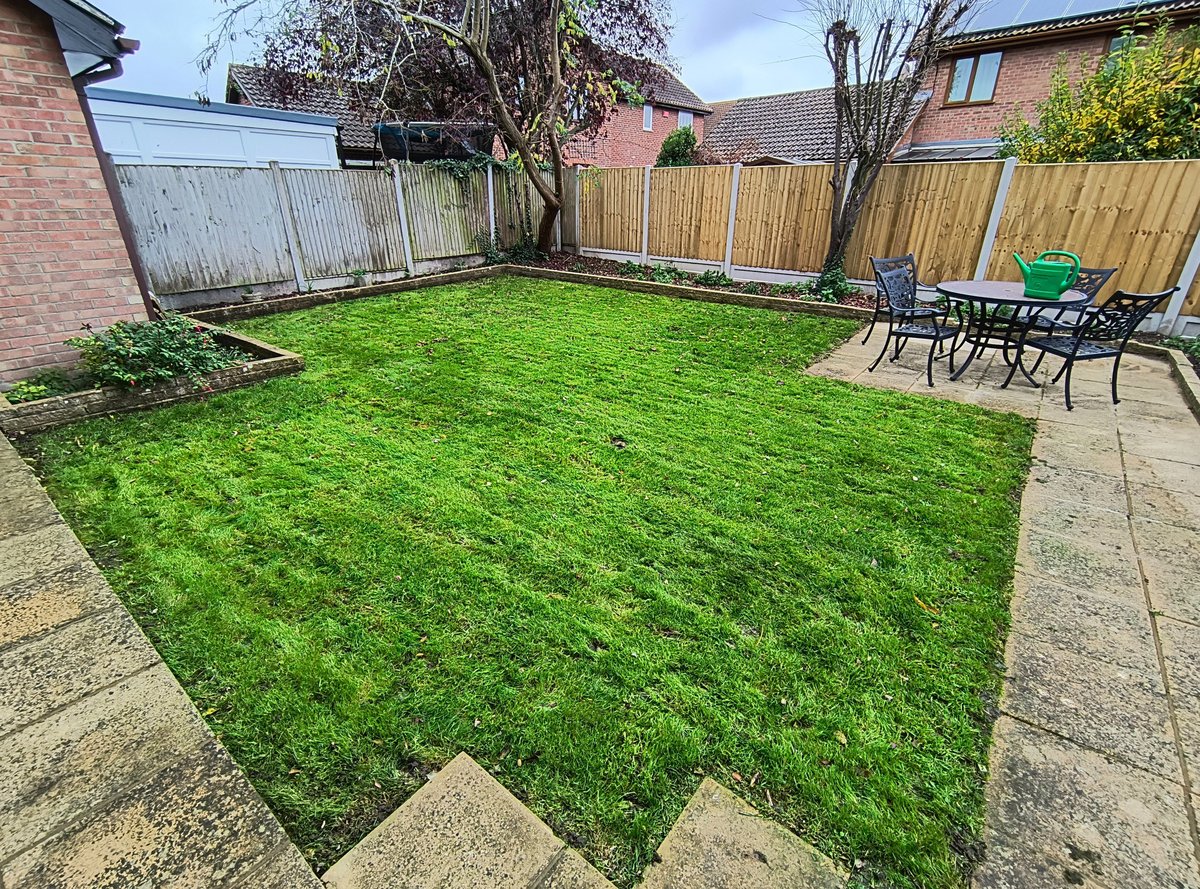
People often use "scarifying" and "aerating" as if they mean the same thing. They don't. Scarifying removes the layer of dead material sitting at the base of the grass. Aerating breaks up compacted soil to let water, air and nutrients reach the roots. Do the wrong one and you won't see the results you're hoping for.
The good news is that diagnosing which one you need takes about two minutes and doesn't require any tools.
Before you start
- Wear sturdy footwear with good grip when working with any lawn tool.
- Clear the lawn of stones, toys and debris before running a mechanical scarifier over it.
- Keep children and pets clear while you are working.
- Never use powered equipment on waterlogged ground. The risk of injury is real and the damage to the soil is significant.
- Disconnect power or remove the battery before clearing any blockage from a scarifier or aerator.
- For petrol-powered scarifiers: fill the tank outdoors and away from any heat source. Never refuel a hot engine. Do not remove the blade guard.
What scarifying does
Scarifying cuts through and pulls out the layer of dead grass, old roots and organic debris that builds up just above the soil surface over time. This layer is called thatch. A thin layer of thatch (under 1 cm) is harmless. A thick layer becomes a barrier: it stops water and feed reaching the roots, creates ideal conditions for moss to take hold, and can slowly suffocate the grass.
Lawns in Kent that are mowed regularly without raking often build up thatch fairly quickly, especially in shadier spots or on heavier clay soil.
What aerating does
Aerating creates small holes or channels through the surface and into the soil below. This relieves compaction, improves drainage and lets air, water and nutrients get down to where the grass roots actually are. A lawn that puddles after rain, feels hard underfoot, or has patches of moss where the ground stays wet is usually suffering from compaction rather than a thatch problem.
Clay soil, which is common across much of East Kent, including around Ash, Woodnesborough and Eastry, compacts more easily than sandy or chalky soil and benefits most from regular aeration.
Side by side: which problem do you have?
| Scarifying | Aerating | |
|---|---|---|
| What it fixes | Thatch and moss build-up | Compaction and poor drainage |
| Signs you need it | Spongy feel underfoot, visible brown layer at grass base, moss spreading | Puddles after rain, hard surface, grass yellowing in summer, moss in wet patches |
| Best time | Early autumn (September to October) or early spring | Early autumn, or any time the grass is growing |
| Basic tool | Spring-tine rake or mechanical scarifier | Garden fork or hollow-tine aerator |
| How it looks after | Thin, patchy, scratched-up for 2 to 4 weeks | Small holes or plugs visible, greens up within a week or two |
| Recovery time | 2 to 4 weeks | 1 to 2 weeks |
If you have both problems
Many lawns, particularly older ones or lawns on clay, have both thatch and compaction. In that case, scarify first and aerate second, ideally a few weeks apart. Scarifying clears the surface layer so aeration can penetrate more effectively. Doing it the other way round is not wrong, but clearing the thatch first gives better results.
How to check your lawn in two minutes
- The thatch test: Push your fingers down through the grass to the soil. If there is a noticeable spongy, brown or grey layer more than about 1 cm thick, you have thatch worth treating.
- The compaction test: Push a screwdriver or pencil into the lawn. If it meets firm resistance in the top 5 to 8 cm, the soil is compacted. Also check: do puddles sit on the surface after rain for more than an hour?
Doing it in autumn: the Kent timing
September and October are the prime months for both treatments in Kent. The soil is still warm from summer, which helps the grass recover quickly, and there's enough growing season left before winter for the lawn to knit back together after scarifying. Do it later than mid-October and you're leaving little recovery time before cold weather arrives.
Spring (April to May) is a reasonable second window if you miss autumn, but the autumn window is better for most lawns because the grass is still actively growing and the conditions are more forgiving.
A video worth watching
Shaun at the LawnRight channel (South Yorkshire, UK) posted a thorough walk-through of how he scarifies lawns professionally, showing the full process and explaining what to expect during recovery. LawnRight has over 55,000 subscribers and covers practical UK lawn care without the jargon. You can watch "How I Scarify Lawns" on YouTube.
When to stop and call us
Scarifying a large lawn by hand is hard work and a hired petrol scarifier is a powerful machine that requires experience to use safely, especially on uneven ground or near beds and walls. If the lawn is on a slope, the ground is still damp, or you're not comfortable operating the equipment, give us a call. Likewise, if there are signs of significant compaction or drainage problems that might indicate something more than surface treatment can fix.
We can do this for you
We carry out scarifying, aeration and full lawn renovation jobs across Sandwich, Deal, Worth, Ash, Woodnesborough, Eastry and Sandwich Bay. Get in touch for a price.