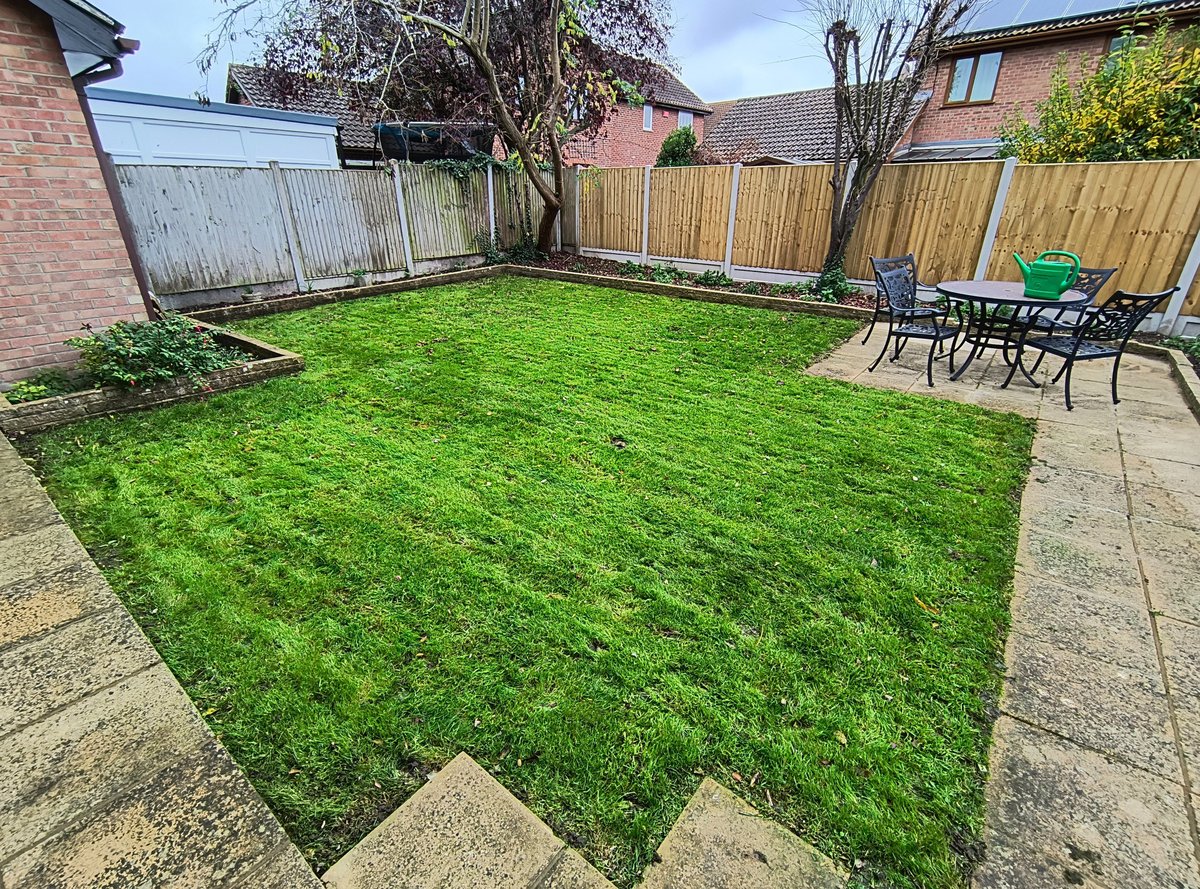
Treat before you rake
Ripping moss straight out with a rake or scarifier before treating it can actually spread the problem, moss releases spores when it's disturbed, and a fresh scarify without treatment first just gives those spores bare, open soil to land in.
A moss-killing lawn treatment applied first kills it off, so what you're raking out afterwards is dead material, not live spores looking for a new patch to colonise.
Scarifying, the actual removal step
Once the moss has blackened and died back, usually a week or two after treatment, it's time to scarify. A spring-tine rake works for a small lawn, a mechanical scarifier makes a much bigger job manageable.
Work in straight, slightly overlapping lines. For a lawn with heavy moss or thatch build-up, going over it a second time at right angles to the first pass gets noticeably more out.
- It will look worse before it looks better, a freshly scarified lawn can look thin and scratched up for a couple of weeks.
- Autumn (September to October) is the best window, the grass is still growing and can recover before winter.
- Spring is the second-best option if you missed autumn, avoid scarifying in a summer drought or hard winter frost.
Why the moss keeps coming back
Treating the symptom without the cause just means a repeat job next year. Moss thrives where grass struggles, usually shade, poor drainage or compacted soil.
Aerating compacted areas with a garden fork, improving drainage where water sits, and trimming back overhanging branches to let more light in all make it harder for moss to re-establish once it's gone.
Prefer we sort it?
We can treat, scarify and tidy up the moss for you across Sandwich, Deal and the villages. Get in touch and we'll take a look.