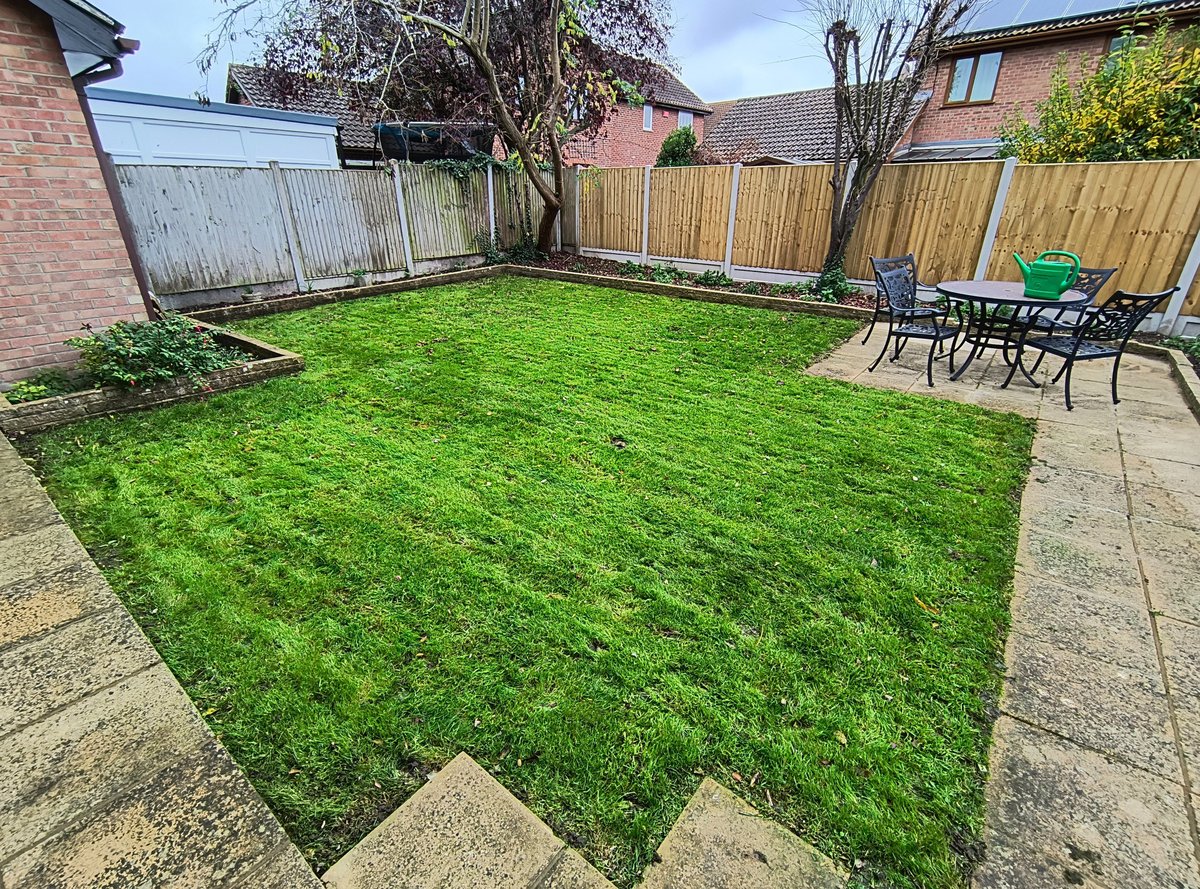
After a particularly wet spell, we get a lot of calls from customers in Sandwich, Deal and the coastal villages asking why their lawn is still sitting under water days after the rain stopped. It's one of the most common winter and autumn problems in this part of East Kent, and for good reason: the soil here is not always kind to lawns.
Before you do anything
Stay off the lawn. Every footstep on saturated soil compacts it further and makes the drainage problem worse. Wait for the water to drain before you attempt any treatment, even raking.
Why Kent lawns waterlog more than most
The coastal plain around Sandwich, Deal, Walmer and Eastry sits on heavy clay that holds onto water long after the rain stops. Clay particles are so fine they pack together with very little space for water to move through. In a wet winter, the water table in some gardens here can rise to within a few centimetres of the surface, which means even moderate rain has nowhere to go.
Some gardens also have chalk subsoil directly under a thin layer of topsoil. Chalk sounds like it should drain well, but a solid chalk layer acts like a plug, holding water above it. If you dig down 20 to 30 cm and hit solid white material quickly, that could be part of the reason your lawn gets so wet.
Step 1: Stay off the lawn
This is easier said than done, especially if it is the main route through the garden. But walking on waterlogged ground compacts the saturated soil particles together and damages the grass roots. If you genuinely need to get across the garden, lay down a plank or two to spread your weight.
Do not mow the lawn. The wheels of even a light push mower will leave ruts in soft ground that take months to settle back, and the blades will tear rather than cut wet grass.
Step 2: Assess how long the water sits
Once the rain has stopped, watch how quickly the water level drops:
- Gone within 12 hours: your drainage is borderline. Hollow-tine aeration each autumn should be enough to keep it manageable.
- Sitting for 24 to 48 hours: a compaction or clay problem. Regular spiking with grit treatment will help over time.
- Still sitting after three or more days: a structural drainage issue. You may need a French drain or soakaway at some point, but spiking will still help as a first measure.
Step 3: Spike the lawn once the water has gone
Once the standing water has drained and the surface is firm enough to walk on without leaving deep prints, it is time to aerate. Push a garden fork into the surface to a depth of 10 to 12 cm, wiggle it slightly to open up the holes, then withdraw it and move about 10 cm along. Work systematically across the whole waterlogged area.
For a larger lawn or one that regularly waterloggs badly, a hollow-tine aerator (which removes plugs of soil rather than just pushing in) is significantly more effective than a fork. You can hire one from most tool hire shops, or we can do it as part of an autumn lawn service.
Step 4: Work horticultural grit into the holes
Once you have spiked the area, pour horticultural grit or sharp coarse sand over the surface and work it into the holes with the back of a rake, brushing it back and forth until the holes are filled. Avoid builder's sand, which is too fine and can set hard in clay soil over time.
This does not fix the underlying clay structure in one session. What it does is create small channels of free-draining material that water can travel down. Done annually each autumn, it makes a noticeable difference over two or three years.
Step 5: Rake out dead grass and overseed
Prolonged waterlogging kills grass from the roots up. Once the lawn dries out and a few weeks have passed, walk over it with a spring-tine rake and see what pulls away easily. Dead grass lifts out in clumps. Rake it clear, loosen the soil underneath gently, and overseed the bare patches.
In Kent, the best time to reseed after a winter waterlogging episode is late spring, April or May, when the soil has warmed back up. Seed sown too early into cold, damp soil is slow to germinate and prone to rotting.
Longer-term drainage improvements
If the problem is severe and recurring, spiking alone will only help so much. Options to consider:
- Hollow-tine aeration every autumn with grit backfill. The most practical DIY solution on clay soils.
- A French drain around the perimeter of the lawn, or cutting through the clay to a soakaway. This is a landscaping job but not a hugely expensive one if the layout allows.
- Raised beds or borders to divert surface run-off away from the lawn area.
- Improving the lawn level if one area is lower than the rest and collects water. Top-dressing with a sandy loam over a few seasons gradually raises low spots.
LawnRight, a YouTube channel covering UK lawn care with over 55,000 subscribers, has a practical video on dealing with waterlogged lawns that is worth watching if you want to see the spiking and grit process in action. Search 'Waterlogged Lawn After All This Rain? Do THIS Now' on YouTube, or go directly to youtube.com/watch?v=xaii2euQSqo.
We can sort it out for you
We carry out hollow-tine aeration and grit treatment as part of our autumn lawn services across Sandwich, Deal, Worth, Ash, Woodnesborough, Eastry and Sandwich Bay. Get in touch and we can take a look.