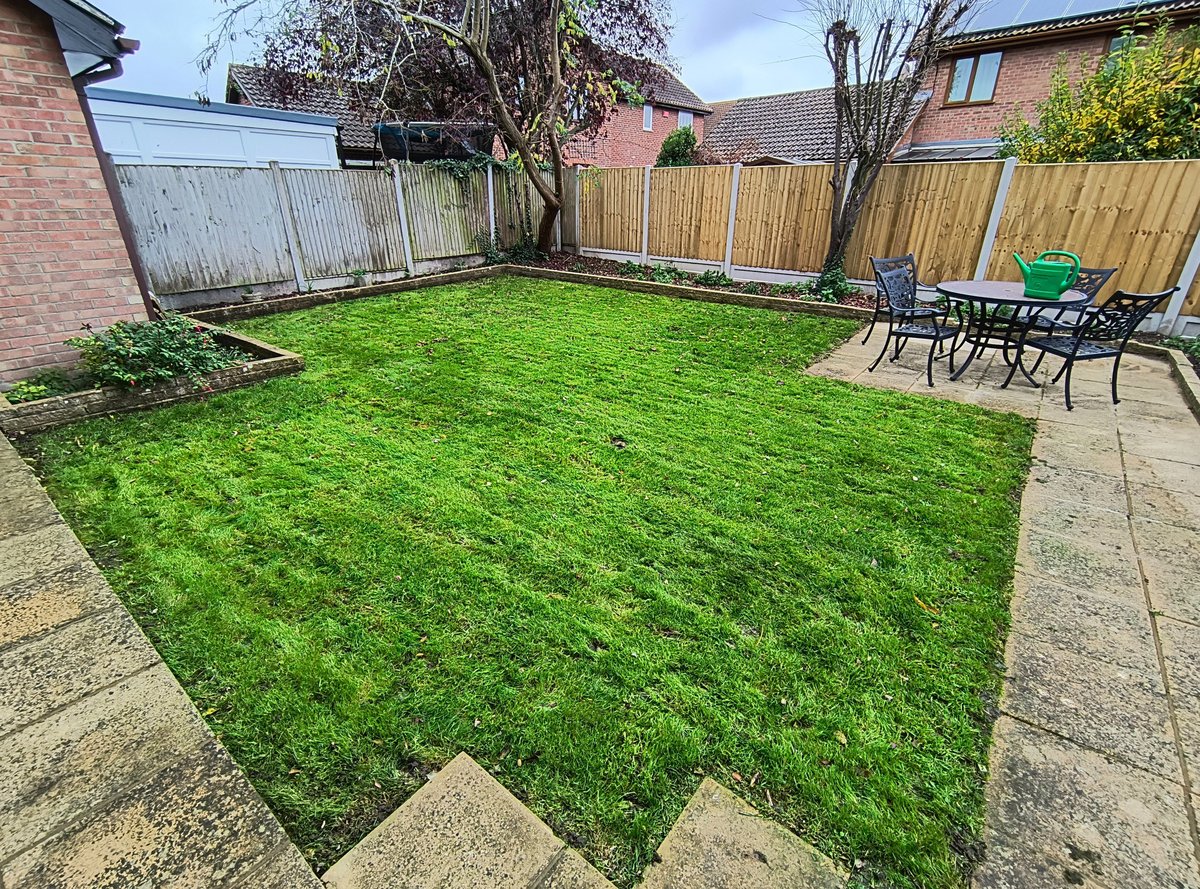
Most Kent lawns build up a layer of thatch over time. Thatch is the matted carpet of dead grass stems, old roots and debris that sits between the green blades and the soil. A thin layer of about half a centimetre is harmless. Once it gets past about 1 cm, it starts blocking water and nutrients from reaching the roots, traps damp against the soil surface which encourages moss, and makes the grass feel spongy and springy underfoot.
Scarifying pulls that layer out. The lawn will look rough and threadbare for two to three weeks afterwards, which puts a lot of people off. Done at the right time of year, the grass recovers strongly and comes back thicker and greener than before treatment.
Before you start
- Wear sturdy footwear and eye protection when operating a scarifier. The machine throws debris.
- Do a walk-over first to remove stones, sticks, garden toys and anything else that could be caught in the tines.
- If the lawn has heavy moss, treat it with a moss killer two to three weeks beforehand. Scarifying live green moss spreads spores rather than removing them.
- Check for buried irrigation pipes or cables before running a powered scarifier over the lawn.
- Keep children and pets clear while the machine is running and for a short time after, until the debris is raked up.
Step 1. Check whether your lawn actually needs scarifying
Push your fingers through the grass down to the soil surface. If there is a spongy, brownish layer more than about 1 cm thick between the green grass and the soil, that is thatch and scarifying will help.
Also look for:
- Moss patches spreading across the lawn, particularly in damper or shadier spots
- Puddles sitting after rain for more than an hour or two, which suggests both thatch and possible compaction
- A bouncy, springy feel underfoot when walking across the lawn
- Patchy, thin grass that does not respond to feeding or extra watering
In Ash, Woodnesborough and Eastry, where clay-heavy soils are common, thatch and compaction often build up together. If you suspect both, scarify first and aerate two weeks later. See our scarifying vs aerating guide for a full diagnosis method.
Step 2. Choose the right time of year for Kent
The ideal window for scarifying in Kent is mid-September to mid-October. The reasons are specific to this part of the country:
- The soil is still warm from summer, which means the grass can begin recovering straight away rather than sitting dormant through the cold months.
- Kent's milder autumns compared to the Midlands and north give the lawn four to six weeks of active growth before the first hard frosts arrive.
- Autumn rainfall does most of the post-treatment watering, which helps any overseeding take hold without you having to water daily.
Spring (April to May) is a usable second option if you miss the autumn window. However, after a spring scarification the lawn has less time to recover before the drying heat and coastal wind of summer, particularly noticeable in Sandwich Bay and along the Deal seafront.
Step 3. Prepare the lawn
Two to three days before you scarify:
- Mow a notch or two lower than your usual height. This helps the scarifier tines reach the thatch without fighting through long grass first.
- Do a thorough walk-over for stones, sticks, toys and any garden fittings that could be caught in the machine.
- If the soil is bone dry, give the lawn a light water the day before to soften the thatch slightly.
If using a hired petrol scarifier, read the operating manual before you start. They are powerful machines and the throttle and depth adjustment settings vary considerably between models.
Step 4. Set the scarifier depth correctly
For a first scarification or a lawn that has not been treated in several years, set the tines to just scratch the surface of the thatch layer. You should feel the tines pulling out material and hear them working, but you should not see bare soil being gouged up on the first pass.
- If thatch depth is over 2 cm, make two lighter passes at 90 degrees to each other rather than one very deep single pass. Aggressive one-pass scarification on thick thatch can leave the lawn set back for longer than necessary.
- Spring tine scarifiers (wire) are gentler and suit thin to moderate thatch.
- Blade scarifiers are more aggressive and better suited to heavy thatch or lawns that have not been treated in several years.
Step 5. Work across the lawn in straight overlapping passes
Push or drive the scarifier in straight, slightly overlapping lines from one end of the lawn to the other. Then do a second pass running at 90 degrees to the first. Empty the collection box frequently or let it fill and rake up the debris in one go at the end.
Once you are finished, the lawn will look rough, thin and patchy. The pulled-out thatch sitting on the surface makes it look worse than it is. Bag or compost all the debris rather than leaving any of it to re-settle on the lawn.
Step 6. Recover the lawn
Immediately after scarifying:
- Overseed bare and thin patches at 25 to 35 grams per square metre. The open ground left by scarifying is ideal for seed-to-soil contact, which is what drives germination.
- Apply an autumn lawn feed, one with higher potassium and lower nitrogen than a spring feed, to encourage root development before winter rather than pushing leafy top growth.
- Water gently if no rain is forecast within 24 hours.
The lawn will look rough for two to three weeks. After that, provided the weather cooperates, it should come back noticeably thicker and healthier than before treatment.
Video reference: How to scarify a lawn | EVERYTHING you need to get it RIGHT | Lawn care for beginners by Premier Lawns (Robbie Lynn), 73,600+ subscribers, UK lawn care channel.
When to stop and call us
A hired petrol scarifier is a powerful machine and not straightforward to use safely on uneven ground, near beds and borders, or on a slope. If the lawn is steep, the soil is waterlogged or soft enough to be damaged by machinery, or you are not comfortable with the equipment, a professional job will give better results with less risk. The same applies if the thatch is so heavy that DIY treatment is unlikely to clear it in one or two passes. Give us a call and we can take a look.
Prefer we do it?
We carry out scarification, aeration and full lawn renovation across Sandwich, Deal, Worth, Ash, Woodnesborough, Eastry and Sandwich Bay. Get in touch for a quote.
Frequently asked questions
- When is the best time to scarify a lawn in Kent?
- Mid-September to mid-October is the ideal window. Kent's milder autumns mean the soil stays warm enough for the grass to recover before winter, and the wetter weather that follows does most of the watering for you. Avoid scarifying in summer when the grass is already under heat stress, and do not scarify after late October or the lawn will not have time to recover before cold sets in.
- How deep should I set the scarifier?
- Set the tines to scratch the surface of the thatch, not dig into the soil. You should feel resistance and see material being pulled out, but not bare soil being gouged up. On heavily thatched lawns (over 2 cm), make two lighter passes at 90 degrees to each other rather than one very deep single pass.
- My lawn looks terrible after scarifying. Is that normal?
- Yes, completely normal. Scarifying strips out a lot of dead material, leaving the lawn looking thin and rough for two to three weeks. After that the grass fills back in thicker and greener than before, especially if you overseed thin patches and apply an autumn feed straight after treatment.
- Should I scarify before or after aerating?
- Scarify first, then aerate. Removing the thatch layer first means aeration holes reach the soil more effectively. Leave a week or two between the two treatments if you plan to do both in the same autumn.
- Can I scarify a lawn myself or should I call a professional?
- Most home lawns can be scarified by a confident DIYer with a hired scarifier. However, if the lawn is on a slope, the ground is damp and soft, or the machine is a large petrol model you are not familiar with, a professional scarification is safer and usually gives better results. We cover Sandwich, Deal and the East Kent villages.