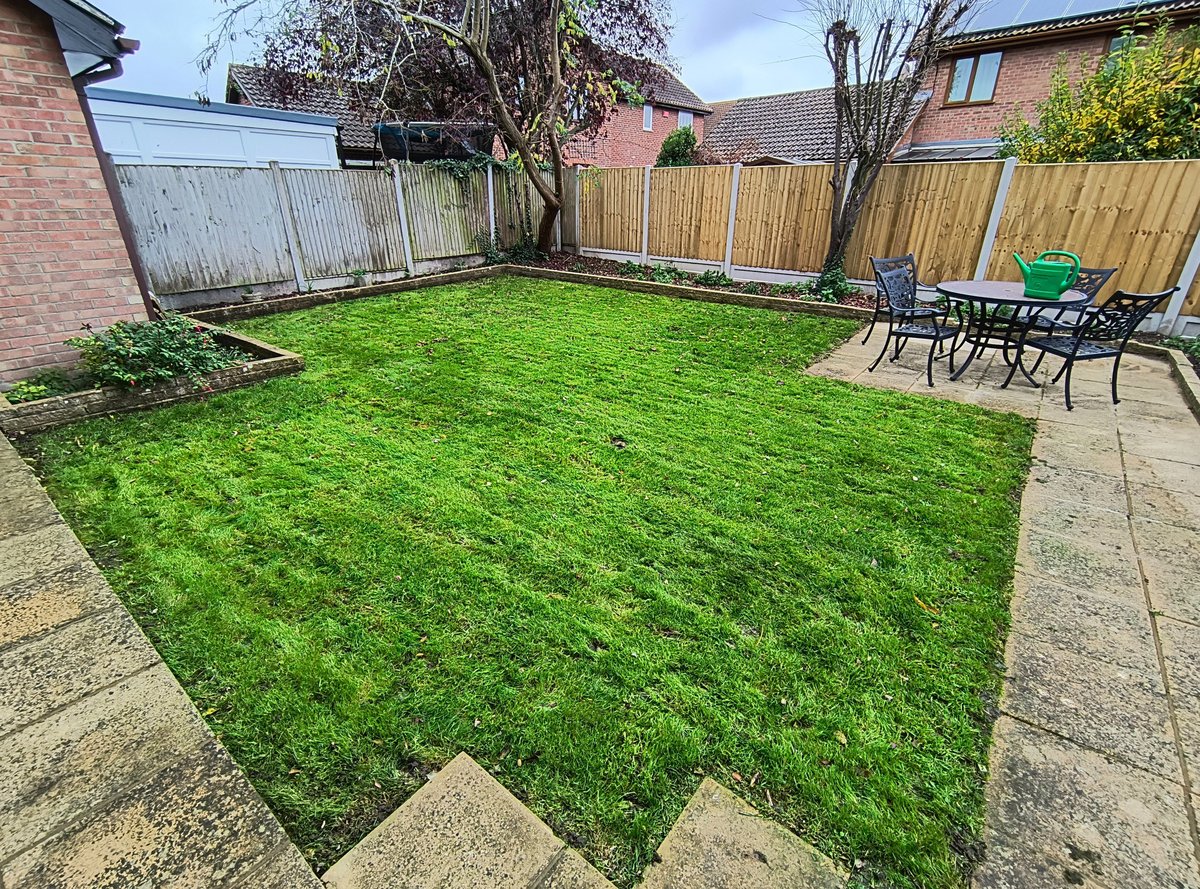
Top dressing is the practice of spreading a thin layer of a sand-loam-compost mixture across the surface of a lawn. Done correctly in autumn, it levels minor hollows, improves soil structure and drainage, encourages deeper rooting and helps break down the thatch layer over time. Done incorrectly, with the wrong mixture or too deep a layer in one application, it can smother the grass and cause more problems than it solves.
For Kent gardens, the soil type makes a significant difference to which mixture you should use, which is why generic advice does not always work here.
At a glance: the five steps
- Decide whether it is needed and choose the right time of year
- Choose the right mixture for your soil type
- Mow short and prepare the lawn surface
- Apply at 1 to 3 kg per square metre and spread evenly
- Work it in with a brush or drag mat and water lightly
Step 1. Decide whether top dressing is needed
Top dressing is most worthwhile when:
- The lawn has noticeable hollows or bumps that make mowing uneven
- The surface drains poorly and puddles form after rain, common on the clay soils in Ash, Woodnesborough and Eastry
- You have just scarified and want to improve the soil structure at the same time
- The lawn feels spongy and thatch-heavy even after scarifying
The best time in Kent is September to mid-October. The soil is still warm from summer, the grass grows actively enough to push through the dressing, and autumn rainfall does most of the watering for you. Top dressing in spring (April to May) is possible but autumn renovation tends to give better results.
Step 2. Choose the right mixture for your soil type
The top dressing mixture must be compatible with your existing soil. Using the wrong type can create a different soil layer that roots struggle to cross, particularly on clay.
- Clay soils (Ash, Woodnesborough, Eastry, much of inland East Kent): use a sandy mixture, roughly 70% sharp sand, 30% compost or loam. The sand improves drainage and prevents the surface compacting again. Do not use a loam-only mixture on clay; it adds to the drainage problem.
- Sandy or light soils (Sandwich Bay, coastal areas): use a loam-dominant mixture, around 60% loam, 20% sharp sand, 20% compost. The extra loam helps hold moisture and nutrients that sandy soils lose quickly.
- General-purpose (most domestic East Kent gardens): a 50/50 mix of sharp sand and loam suits the majority of residential lawns where soil type is mixed or uncertain.
Pre-mixed lawn top dressing is available in bags from most garden centres and gives reliable results. Mixing your own from bulk materials is cheaper for larger areas.
Step 3. Mow short and prepare the surface
Mow the lawn one or two notches shorter than your usual height two to three days before top dressing. The dressing needs to reach the soil surface, not sit on top of a thick mat of grass, so a shorter, open sward gives the best result.
If you are top dressing immediately after scarifying, the surface is already open and receptive; no further preparation is needed beyond clearing any remaining debris. If the lawn has not been scarified, rake off any surface thatch or debris first.
Step 4. Apply at the right rate
Use a shovel or bucket to scatter small heaps of top dressing evenly across the lawn surface. Typical application rates:
- Routine improvement: 1 to 2 kg per square metre (a layer roughly 5 to 10 mm deep)
- Filling hollows: up to 3 kg per square metre in the affected area
Do not apply more than about 2 cm depth in a single application. A deeper layer in one go will smother the grass rather than help it. For deeply uneven areas, it is better to make two lighter applications a year apart than one very thick one.
A 50 to 80 square metre lawn (typical for a small-to-medium East Kent front-and-back garden) needs roughly 75 to 160 kg of material at standard rates, which is usually four to seven 25 kg bags.
Step 5. Work it in and water
Once the heaps are scattered, spread and work the dressing into the grass using:
- A stiff broom or drag mat pulled back and forth across the lawn
- The back of a lawn rake in a circular or sweeping motion
The aim is to fill hollows and coat the soil surface so the grass blades are still visible above the dressing, not buried under it. Work in different directions to push material into low spots evenly.
Water lightly with a sprinkler if no rain is expected within 24 hours. Do not overwater; you want the dressing moist enough to settle, not washed into a muddy surface.
The lawn will look rough and partially smothered for one to two weeks. After that, the grass pushes back through the dressing and the surface starts to look better than before.
Video reference: Full lawn renovation (live) by Premier Lawns (over 100,000 subscribers, Belfast, UK), demonstrating a complete autumn renovation programme including scarifying, aerating and top dressing on a UK residential lawn.
When to stop and call us
If the lawn is severely uneven, with hollows deeper than 4 to 5 cm, or the drainage problem is substantial rather than surface-level, top dressing alone will not solve it. Deeper hollows need the turf lifted, the level corrected underneath and the turf replaced. A drainage problem that causes pooling for more than a day after rain usually needs a soakaway or drainage pipe rather than a sandy dressing. If you are not sure what the lawn needs, get in touch and we can have a look.